What I Learned About Gin When I Stopped Believing It Was Only for Summer
Updated: Sep 2

There's a version of gin that lives in a tall glass with ice, tonic and a wedge of something citrus. You’ll find it at garden parties and rooftop bars, on every drinks menu that wants to say it’s got options. It’s refreshing, it’s easy and there is nothing wrong with it at all.
But if you've only ever drunk gin that way, you've missed most of what's in the bottle.
Now, I'm not knocking G&Ts, or tonic water, or anyone ordering a G&T. A good gin and tonic is a great, refreshing drink. The point is it is a starting point, not a destination. To think it's the only way to experience gin is a little like only ever listening to a piece of music at half volume. You’re starting to get the shape of it. You don't get everything.
None of those things, tonic, ice, carbonation, are enemies of gin. When used correctly, they can lift it. But they do a lot of work for you, too. Sometimes that work is to cover up what’s really there. First, to know what's underneath means that every choice you make about what you add to it becomes a more interesting decision.
What botanicals actually do
Botanical is gin’s entire identity. It’s defined by juniper first, and then built on whatever else the distiller has decided to layer on top of it. A cold, fizzy, sweetened mixer can flatten things, and the layering is what makes gin interesting.
The juniper is not up for negotiation. Legally, any spirit that is called gin must have juniper as the dominant flavour (there's no minimum percentage, but it has to be distinctly perceptible above everything else). People who call juniper pine and Christmas trees, aren't exactly wrong, but are reaching for the most familiar reference point rather than the most accurate. At its best, juniper is resinous and herbal with a dry, slightly dusty quality that grounds the entire botanical build. Length, in tasting terms, is how long a flavour lingers after you have swallowed it. Juniper is the backbone of gin's enduring appeal. A gin without it... well isn't gin at all.
The options outside of juniper, however, are huge. Coriander seed (or cilantro) has a warm woody citrus note, drier than lemon, drier than orange. Angelica root adds an earthy depth and a subtle bitterness to keep the whole thing grounded. Citrus peel adds brightness but also, depending on how it is used, a waxy, almost fatty texture that you can feel on your palate long after the sip has gone.
Then you have the florals. Rose. Lavender. Elderflower. They take the whole profile down to something softer, more powdery. And the spices. Cardamom. Pepper. A heavily spiced gin is a lot nearer to a whisky in its warmth. It doesn't always wear a G&T label. The cold can shut it down before it has a chance to open up.
I have synaesthesia, which means that the senses of taste and smell create involuntary colour and visual sensations for me. With a gin that is heavy on botanicals, I taste it in layers, with different parts of the build arriving at different times, producing something different. What I see is personal to me and I would never claim it maps onto anyone else’s experience. But for those who pay attention, the layering is there. It’s simply a matter of giving your senses enough to work with.
Start with the gin itself
This is the most important part in this whole post.
Spend five minutes with the gin on its own before you build a drink. Not to drink it like that forever, and not because that’s the only good way to drink it, but because it tells you what you’re really working with. Every good choice about what to add comes from knowing what's already there.
Nose it first. Gin has aromatic compounds that are volatile, so if you let them, they’ll get to you before the liquid does. What steps forward? Is it dry and juniper-forward? Floral, soft? Bright like a citrus fruit? Hot, spicy? First impressions is useful information.
Then taste a small amount neat (no ice). Just let it be for a bit. Notice the texture and the flavour. Is it light and clean? Oily and round? Does it linger on your palate? Or does it disappear quickly?
None of these are tests with right answers. They're only observations. What you’re doing is building a picture of what the gin actually is and that then becomes the basis for everything that you do with it afterwards based on your perception and preferences.
Using that foundation to build something better
But once you know what is dominant in a gin you can make much more interesting decisions about what to pair it with.
A dry, juniper-forward gin can do something excellent with a quality, not-too-sweet tonic, as the bitterness of the tonic echoes the dryness in the spirit rather than fighting it. Instead of lemon, use a little bit of grapefruit peel and you are coaxing out the more resinous, complex side of the juniper rather than just brightening it.
A floral gin doesn’t want a classic tonic necessarily. It may want something lighter, or it may be best expressed in a cocktail that treats the floral notes as the lead rather than the background.
A spice-forward gin can go in a whole different place. It might be interesting to sip this over a large single ice cube with a strip of orange peel. The warmth of the room, the lack of fizz, the way the spice expands rather than draws in. It's a different drink to a summer G&T, and no lesser one.
It’s not about giving up your preferred way of drinking gin. It’s knowing what’s in the glass well enough to make choices, not defaults.
How to do this when you're out
None of this requires you to be at home with a tasting glass and total silence. There’s a simple way and it works everywhere.
If you're ordering a new gin for the first time, order it 'on the rocks' not in a mixer right off the bat. One cube, not a full glass. Wait two or three minutes. Take a drink. Notice one thing. Just one thing. Softer than you thought it would be? Dry? Does something unexpected come out?
That one observation tells you a lot. It tells you if you want something sweet with it, or something bitter, a delicate tonic, or something with more character, a mixer at all, or something else entirely.
If you find yourself in a bar and you're not sure what to order, ask the bartender what gin they've been working with lately. A good bartender will know their list and tell you straight up.
And if something comes out and it's not quite right (the tonic is too sweet, the garnish is fighting the gin, the balance is off) you've still learned something useful. It costs you nothing but the one drink, and it means the next one is a better-educated choice.
The point isn't to find the right way to drink gin. The point is to find what you really like and get there quicker.
It's not just for summer
Almost entirely through marketing, gin became a summer drink. Garden parties. Beach days out. The visual language of ice and sunshine and open spaces. That association has done gin a quiet disservice, persuading a lot of people that gin isn't for winter, or for evenings, or for slow contemplative drinking.
No doubt about it. A spice forward gin on a cold night, slowly savoured, is a totally different experience to the same bottle in July, and a valid one. It’s not what gin can do, it’s about the seasonal assumption. It’s what we want from it.
If you love gin and only ever drank it as a summer drink, the rest of the year is not a problem to solve. It is an invitation to find out what else it can be.
A few of my favourite gin cocktails, by season
These are drinks I keep coming back to. They all suit a particular part of the year, and they all give a particular gin room the chance to do something interesting.

SPRING
Elderflower Gin Fizz
Light, floral, and exactly right when the weather starts to behave.
Elderflower needs a gin that will stand up to it and not be lost under it. Hendricks Neptunia is it for me. It has the cucumber and rose of the classic Hendricks profile, but with a coastal, slightly saline quality that stops the elderflower from becoming overly sweet. It’s something genuinely fresh without being cloying.
Recipe:
50ml Neptunia Hendricks
20ml elderflower cordial
Juice of half a lemon
Top with soda water. Serve over ice with a cucumber ribbon and a sprig of mint.

Summer
Strawberry Gin Rickey
The Rickey is drier and sharper than a Collins, no sugar syrup, just citrus. The strawberries bring the sweetness naturally, which means the gin has to hold its own.
Silent Pool Rare Citrus Gin was made for this. A Surrey gin, complex citrus-forward profile, multiple citrus botanicals over a clean, slightly floral base, the fruit notes complement fresh strawberry without competing. It remains light the whole time.
Recipe:
50ml Silent Pool Rare Citrus Gin
Juice of a lime
4-5 fresh strawberries muddled
Top with soda water. Serve over ice, no sugar needed. Garnish with a strawberry and lime wheel.
For variations: Difford's Guide Gin Rickey

Autumn
Bramble
Blackberries, lemon, a splash of crème de mûre. One of many great British cocktails and made for the season.
The Bramble calls for a gin that can stand up to berries and citrus. Foraged seasonally, Glendalough Wild Botanical Gin is true wild botanicals rather than a set recipe, and in particular the autumn expression brings with it berried, earthy notes that seem made for this drink. It’s a gin that already knows what season it’s going into.
Recipe:
50ml Glendalough Wild Botanical Gin
25ml fresh lemon juice
12.5ml sugar syrup
Shake and strain over crushed ice. Drizzle 15ml crème de mûre over the top so it bleeds through. Garnish with a blackberry and lemon slice.
Winter
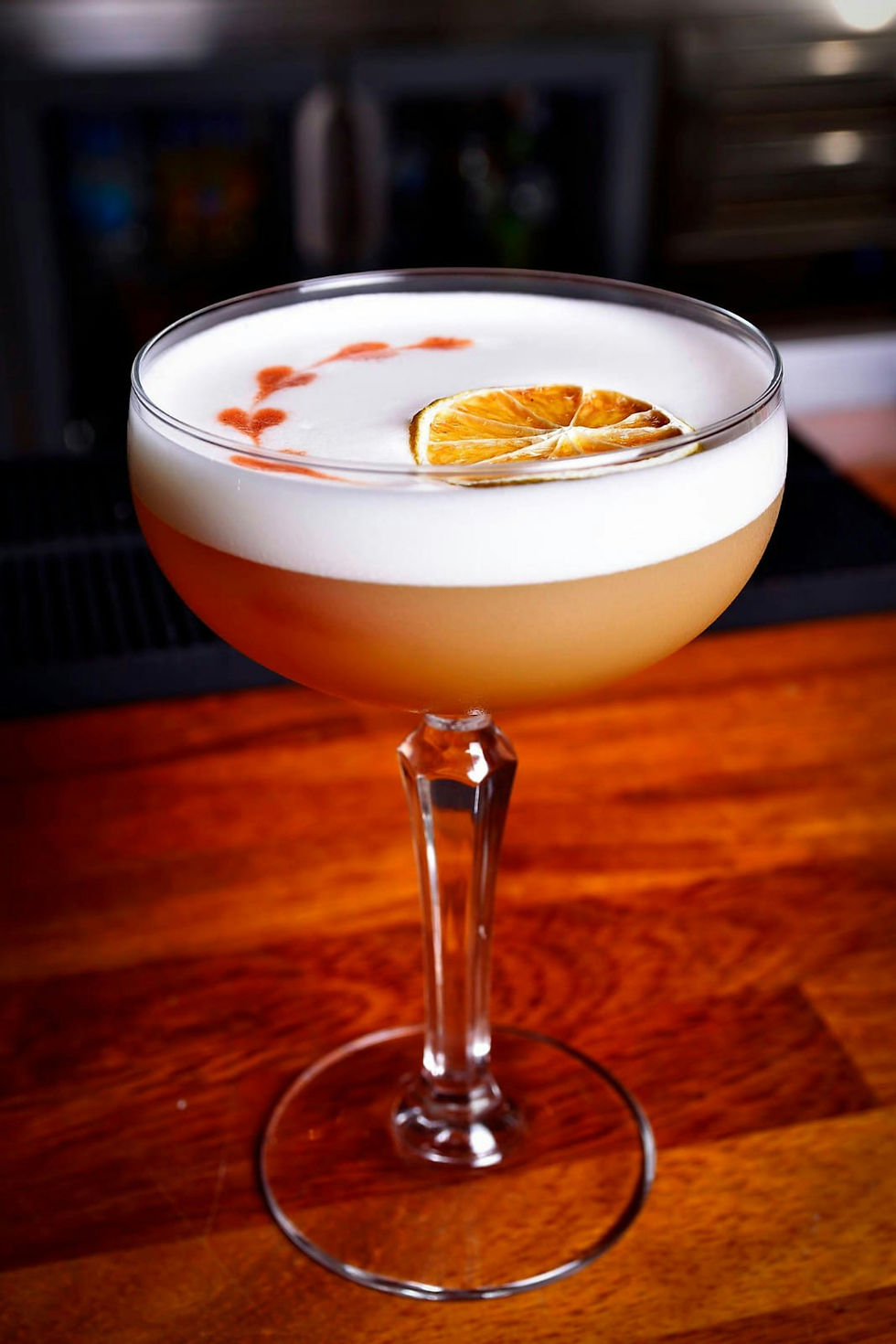
Gin Sour with spiced gin
Lemon, sugar, egg white, and a gin that has something to say. The egg white gives it body and softens the edges, so the spice needs to hold its own through that.
Edinburgh Gin Rhubarb & Ginger does just that. The ginger adds real warmth, the rhubarb gives a tart fruity tang that complements the lemon rather than competes with it, and it all feels like a proper winter drink rather than just a summer gin in a different glass. It’s a Scottish gin too and that feels right.
Recipe:
50ml Edinburgh Gin Rhubarb & Ginger
25ml fresh lemon juice
15ml sugar syrup
half an egg white
Dry shake first (no ice) to emulsify, then shake again with ice. Double strain into a coupe. Garnish with a dehydrated lemon wheel or crystallised ginger.
One last thing
None of the cocktails above require you to understand gin in-depth before you make them. But if you’ve spent five minutes with the gin first, nosing it, tasting it, noticing one thing, they’ll taste better. Not because the recipe was changed. Because you did.
It's a tiny shift, from drinking on autopilot to drinking mindfully. It doesn't require expertise, vocabulary or the right glassware. Just wondering. And once you have it you can’t really turn it off. You start to see things in every glass, every season, every bar you step into. That’s not a weight. It’s just more fun to drink.
And that’s exactly what every Vantage Creative experience is built around, no matter what spirit is in the glass. Start with what's really there. Build from your perception outward. See what you find out. If you wish to try that out, please get in touch at samantha@vantagecreativescot.co.uk.
Your senses. Your discovery.



Comments