What the Rest of the World Already Knows About Food and Drink
Food and drink go together in my mind the way music goes with a mood. Not as a constructed pairing exercise, not as something that needs a tasting menu and a sommelier, just as the most natural thing in the world. You eat. You drink. The two inform each other. The flavour in the glass changes depending on what you've just put in your mouth, and the food tastes different because of what you're drinking alongside it. It's not a theory, it's just how the senses work.
Running tasting experiences across several spirit categories has deepened that instinct into something I think about constantly. Some of what I offer involves neat spirit. Some involves a simple mixed drink. The format varies by culture and preference, but the principle is the same in every case: drink and food belong in the same conversation, and the conversation is almost always better when they're both at the table.
Most of the world figured this out centuries ago. Several serious drinking cultures covered in this blog, Japan, Spain, Mexico, the Caribbean, and the American South, have food woven into how they drink. Not as an afterthought or a pairing exercise, but as a matter of everyday ritual. Scotland is slightly different. Understanding why is more interesting than simply saying it got left behind.
Scotland: a different history, not a failed one
The harsh conditions of rural Scottish life shaped everything about how people drank. Ale and whisky provided calories and warmth in a climate that didn't always offer much of either. The drink was often as much sustenance as the meal itself.
That's not a culture built around gastronomy and pleasure at the table. It's a culture built around survival and community, and there's nothing shameful in that history.
Scotland has always had food and whisky together in specific, ceremonial moments. Haggis with whisky sauce at Burns Night. Cranachan at a celebration. A dram at a christening or a funeral. These pairings exist, and they're culturally specific in the best way. What Scotland didn't develop was the everyday Mediterranean idea of the drink and the table being woven together as a matter of routine pleasure rather than occasion.
What's changing now is significant. Whisky's key role in Scotland's food culture and dining scene has never been more exciting. The Glenturret Lalique Restaurant has earned two Michelin stars. TimeSpirit at The Macallan Estate operates a nine-course tasting menu developed alongside the Roca Brothers of El Celler de Can Roca in Girona. Spirit of Speyside Whisky Festival now includes whisky-paired dinners created by local chefs as a growing part of its programme. The gastronomy layer is arriving, and Speyside is leading it.
Scotland isn't behind the curve through ignorance. It had a different relationship with the drink historically, one built on utility and ritual rather than daily pleasure, and it's catching up now. It's a shift I'm genuinely excited to be part of. Which is exactly why I find it useful to look at what the rest of the world already figured out, and what Scotland can learn from it.
Japan: the drink was designed around the table
The izakaya (pronounced ee-ZAH-kah-yah, written 居酒屋, literally "stay-drink-place") traces its roots to the Edo period, roughly 1603 to 1868. There's a Japanese proverb from the era that captures how each of the country's great cities defined itself: "In Edo, they ruin themselves on footwear; in Kyoto, on clothing; in Osaka, on food." Each city poured its passion and its money into something specific. Osaka's was always the table.
The first reference to a "seated sake seller" dates to the end of the 1600s in Edo, when many sakaya, sake shops where customers would purchase rice wine by volume, had stopped brewing their own sake, instead purchasing it from the Osaka and Kobe region, which Edo's connoisseurs judged as producing the best. Customers began lingering rather than leaving, and the sakaya responded by rolling out seats and simple snacks. The izakaya was born from that instinct to stay.

The food came with the drink from the beginning. Simple snacks first, then gradually fuller menus as the format evolved. Today, approximately one in five restaurants in Japan can be considered an izakaya. What's on the plate varies dramatically by region, and that matters because it shows the same principle operating everywhere: what grows locally shapes what appears alongside the drink. In Osaka, okonomiyaki (oh-koh-NO-mee-yah-kee, a savoury pancake of cabbage, pork, and seafood) appears on izakaya menus as a local speciality. In Hokkaido, izakayas lean toward fresh seafood, uni, ikura, and kani, because the island's cold waters produce some of Japan's finest.
The defining Japanese whisky experience is the highball, a meticulous blend of whisky and highly carbonated soda over crystal-clear ice, designed specifically to work alongside food rather than despite it. Shochu, a Japanese distilled spirit made from barley, rice, or sweet potato, typically around 25% ABV, pairs naturally with izakaya dishes, grilled meats, and hot pot. Whisky and gin go with simple snacks, dark chocolate, and citrusy desserts. The pairing logic is embedded in the culture rather than something you have to think about consciously.

There's also a social contract worth understanding. In an izakaya, you don't pour your own glass. As a guest at the table, you keep an eye on everyone else's drink and refill theirs before it runs dry. In return, they do the same for you. Nobody has to ask. Nobody goes without. The act of pouring for others is a gesture of care and attention, and the evening flows because of it. The drink is a vehicle for connection. The food extends the occasion.
Try it at home: A Japanese highball, whisky with very cold, highly carbonated soda in a roughly 1:3 ratio over clear ice, alongside edamame with flaked sea salt, or a small plate of yakitori-style chicken skewers.
Spain: the ritual is the experience
Vermouth arrived in Spain through Barcelona in the late 19th century, when the city had one of the largest communities of Italian immigrants in Europe. The drink became rapidly famous after Torino opened in 1902 on the Passeig de Gràcia in Barcelona, a bar considered the "palace of vermouth," from which the tradition spread through Catalonia and then across Spain.
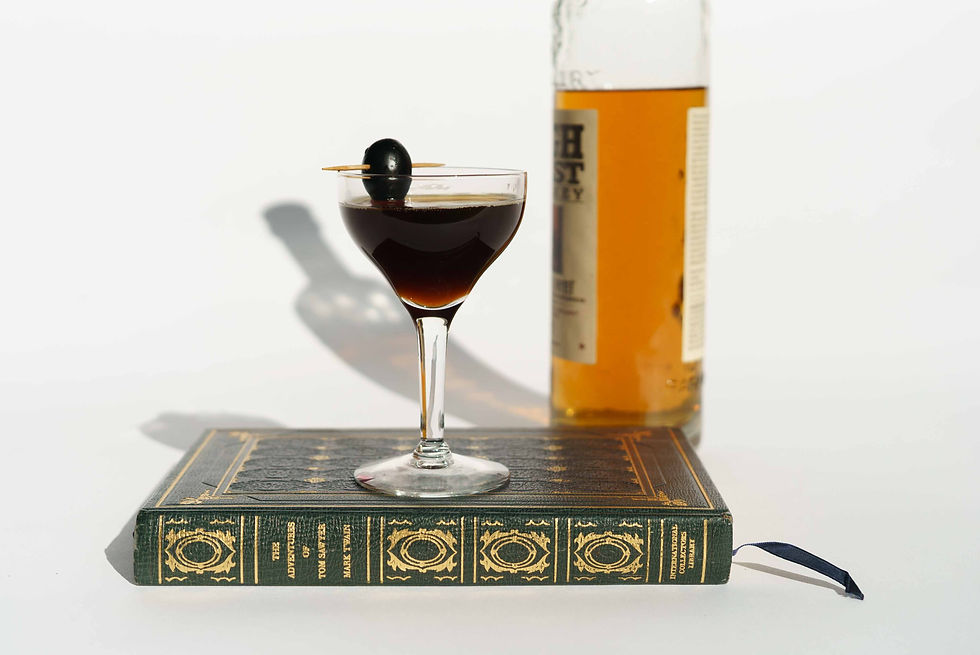
La hora del vermut (pronounced lah OH-rah del behr-MOOT, literally "the vermouth hour") is a nationwide phenomenon, but its expression varies by region. In Catalonia, vermouth is often enjoyed with escabeche (es-kah-BEH-cheh), a dish of fish or meat marinated in vinegar and spices. In Madrid, bocadillos de calamares (boh-kah-DEE-yos deh kah-lah-MAH-rehs), squid sandwiches, are the classic companion. In Barcelona specifically, neighbourhood bars like Quimet & Quimet in Poble Sec and the century-old Bar Electricat in La Barceloneta serve vermut from unlabelled bottles, the waiter measuring the pour to calculate the bill.
Before the Spanish Civil War, vermouth was an evening affair. When Franco's dictatorship stretched workdays and pushed mealtimes later, vermouth time shifted to midday and la hora del vermut became a pre-lunch institution. Spain has its rituals. The late-night dinners, the morning café con leche on a bustling terrace, the way entire cities shut down for a siesta. But few traditions capture the sheer joy of existence quite like la hora del vermut: that hour before lunch when the world pauses for a cold glass of sweet,
herbaceous vermouth, a few salty snacks, and some unhurried conversation.

In Andalucía, in the south, sherry plays a similar role. Sherry can only be produced within the sherry triangle, the towns of Jerez de la Frontera, Puerto de Santa María, and Sanlúcar de Barrameda. During Seville's Feria de Abril each spring, the rebujito (reh-boo-HEE-toh), sherry mixed with lemon-based soda and fresh mint, is the drink of the festival. Same philosophy as la hora del vermut, different region, different glass.
Try it at home: Chilled Spanish vermut on the rocks with a slice of orange and a green olive, alongside anchovies on toast or a bowl of salted almonds.
Mexico: what grows together goes together
Mezcal originates primarily from the Mexican state of Oaxaca (wah-HAH-kah), where traditional pairings are built from the same land as the spirit. Sal de gusano (sal deh goo-SAH-noh), a finely ground powder of chilli, sea salt, and dried agave worm, has an umami-rich flavour that offers a bold counterpoint to any mezcal. Chapulines (chah-poo-LEE-nehs), toasted grasshoppers seasoned with garlic, lime, and chile, are another traditional Oaxacan pairing. Both come from the same state, share earthy profiles, and the combination is one of those moments that makes food pairing feel like discovery rather than homework.
The sangrita (san-GREE-tah), a chaser of chilli, citrus, and pomegranate, is a peppery, palate-cleansing drink crafted to be taken alongside mezcal rather than mixed with it. It resets the palate between sips rather than softening the spirit. Dark chocolate and mezcal share flavour compounds, both developing complex, slightly bitter, roasted notes through their respective production processes: cacao roasting and agave roasting in underground pits.
Tequila follows similar logic, though it comes from a different agave variety and a different region. A high-quality blanco (unaged) tequila alongside fresh ceviche, its peppery notes cutting through the richness. A reposado (aged) tequila with the caramelised warmth of carnitas. The margarita, when made with quality 100% agave tequila, fresh lime, and agave nectar, is a remarkably considered drink. Simple, balanced, and made for the food around it.

Mexican cuisine is on UNESCO's Intangible Cultural Heritage list for good reason. The food and the drink come from the same place, the same terroir, the same agricultural history. The pairing is never constructed. It's inherited.
Try it at home: Mezcal neat with a wedge of orange, a pinch of smoked chilli salt, and a squeeze of lime. Or a classic margarita alongside tortilla chips with guacamole and a sprinkle of sal de gusano or smoked chilli salt.
The Caribbean: rum is not just what's in the glass
In Jamaica, rum is there for life's big moments: a little splash to wet the baby's head at a christening, to marking the ninth night after a death with toasts and stories. In Trinidad, on any given night you'll find crowds lining Ariapita Avenue's many bars, rum in hand. In Haiti, a splash is still poured out as a gesture of respect ahead of a Vodou ceremony.
Unlike European pubs or American bars, Caribbean rum shops evolved into unique cultural spaces serving functions far beyond the dispensing of alcohol: simple, unpretentious establishments where the community gathered, talked, and marked time together. The style of rum varies dramatically by island. Jamaica's rums are typically funky and bold. Barbados, widely considered the birthplace of Caribbean rum, produces smooth expressions with spicy wood notes. Martinique's rhum agricole (ron ag-ree-KOL), made from fresh sugarcane juice rather than molasses, is powerful and grassy, entirely unlike anything produced elsewhere.
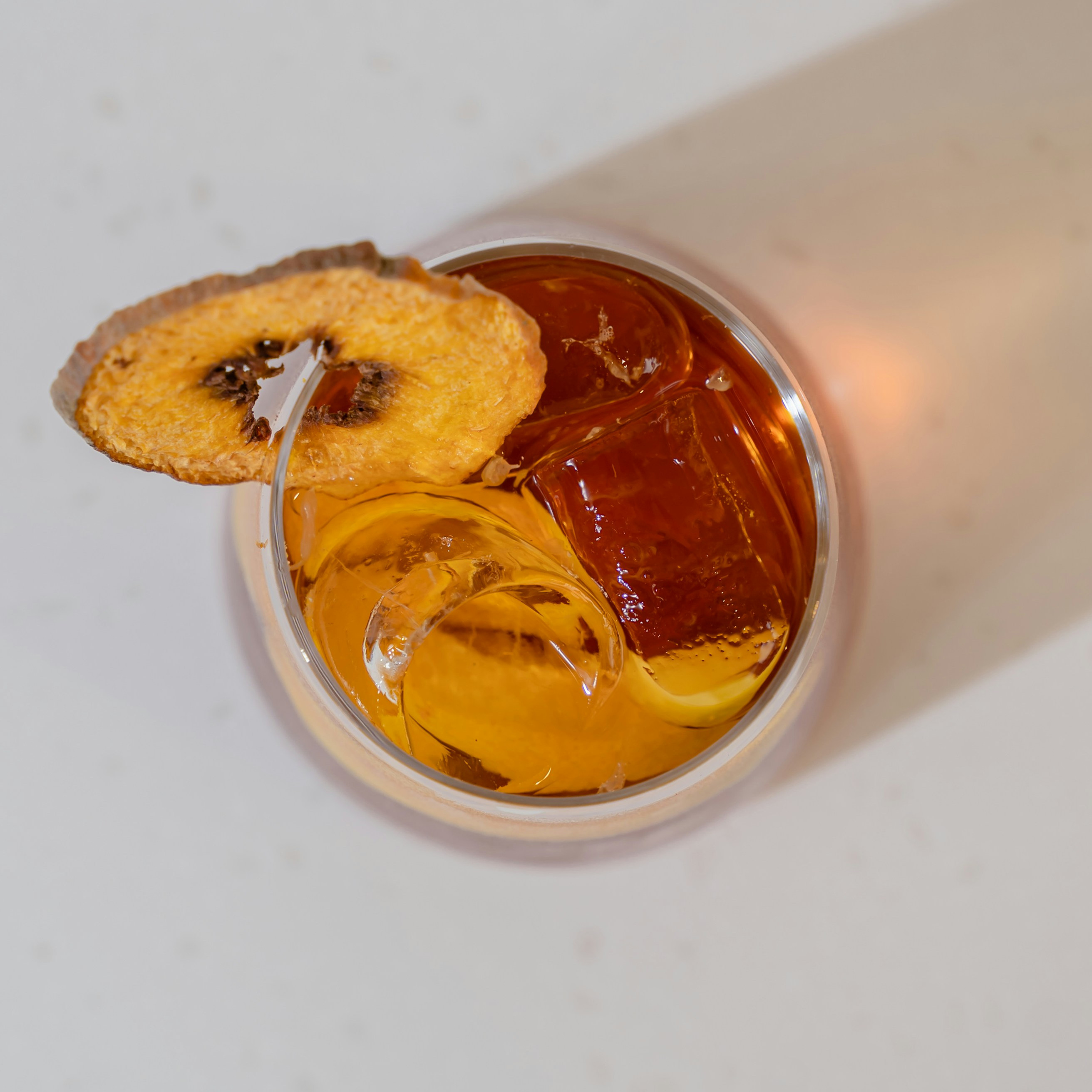
The food served alongside reflects each island. Jerk chicken in Jamaica. Pelau, a pigeon peas dish beloved across Trinidad and Haiti. Fried plantain. Festival bread. Rum cake at celebrations. The pairing principle is the same one running through every culture in this blog: what grows together goes together.
Rum punch follows the same ratio across the Caribbean regardless of island: one of sour, two of sweet, three of strong, four of weak. The proportions change what you're drinking. The principle doesn't.
Try it at home: A simple rum punch, one part lime juice, two parts sugar syrup, three parts rum, four parts cold water or soda, over ice. Alongside plantain chips or jerk-seasoned nuts.
America: bourbon and the table
The pairing of bourbon and cured meat is one of the oldest food traditions in Kentucky, rooted in the same geography that produces both. Country ham, dry-cured and aged for months or years, is the classic example. Kentucky distillery tasting rooms increasingly offer food alongside their pours, and the food opens flavours in the bourbon that are not perceptible without it. Fried chicken's crispy salt and fat push against the bourbon's sweetness, with each element making the other more pronounced. Pecan pie and bourbon share nutty, caramelised notes that mirror each other in the best way.
The mint julep, bourbon with fresh mint, sugar syrup, and crushed ice, is the official drink of the Kentucky Derby and one of the oldest American cocktails. The Old Fashioned, bourbon or rye with sugar, bitters, and a twist of orange, is arguably the most considered way to drink bourbon in a cocktail format. Both exist to be enjoyed alongside food.

I lived in North Carolina for 10 years, and that time gave me a real education in Southern food. Sweet potato pie. Slow-cooked pork. The warmth of a bourbon on a cold evening. Those flavours are part of my story before Scotland existed in my life at all.
Try it at home: Bourbon neat or on a single large ice cube alongside a small slice of pecan pie or a piece of aged cheddar. Or a classic Old Fashioned alongside something slow-cooked and rich.
What this means for Vantage Creative
The variety of spirits I offer, Scotch whisky, bourbon, Japanese whisky, gin, rum, mezcal, and tequila, is a philosophical decision as much as a commercial one. If I only ran Scotch tastings, I'd be doing what the industry has always done: assuming one category is the whole conversation. Seven spirits means seven ways into the same question. What do you actually perceive in this glass?
Food makes that question richer. Every culture in this blog, and many more, already knows it. The drink and the table belong together not because it's elegant or sophisticated, but because flavour doesn't exist in isolation. What you eat can change what you taste. What you taste changes what you feel. The combination is the experience, not the spirit alone. Who hasn't wanted a home-cooked meal after a long trip to feel warm and grounded? Or a classic dish from a family member's kitchen for the sheer comfort of it? Food and drink carry memory in a way that neither does quite as well alone.
One of the most interesting experiences I've designed to date that touches this was the Dawn Drams in Dufftown at Spirit of Speyside 2026. Partnered with Speyside private chef Lewis Drabble, a breakfast tasting menu came together around a Speyside twist on tattie scones, marmalade and fennel pollen doughnuts, fresh berry and homemade granola with natural yogurt parfait, and whisky cream-infused banana bread. Nothing overly elaborate, but every element connected to the region and the tasting. The food wasn't decoration. It was part of how the whisky landed.
What I want to build towards is something more personal. A tasting menu that tells a story, well, my story specifically, from the west coast of America to the north east of Scotland.
A mezcal or tequila-inspired cocktail alongside something rooted in So-Cal food culture. The beginning. The Mexican influence that shaped California, and everything I grew up eating.
American bourbon with something that captures the warmth and sweetness of the Southern states I called home for a decade. The spirit and the food carrying the same easy, generous quality.
A London Dry gin alongside a classic of the London table. A nod to the city that first connected me to this part of the world.
Scotch whisky with something sweet and Scottish. A connection to the home I've built here, paired with the spirit that started this whole new chapter.
Four spirits. Four places. One story.
It's an aspiration for now. But it's the direction. And it's built on the same logic the rest of the world has been using for centuries: the drink and the table belong in the same conversation. Scotland is starting to figure that out, and I'm glad to be part of how that happens.
If you want to explore what that looks like in practice, get in touch at vantagecreativescot.co.uk.
Your senses. Your discovery.
If you're staying in Speyside and want to explore this kind of experience in person, I work with Brylach Steading to offer tastings for their guests, but also host private tastings for small groups too outwith. And if you're looking for a private dining experience that brings the food side of this to life, Lewis Drabble is the person to speak to, find him on Instagram at @privatechefdjljd.


Comments