

What Fraser Campbell Taught Me About Going Independent, Building Community, and Why Whisky Needs More Honest Weird Tasting Notes
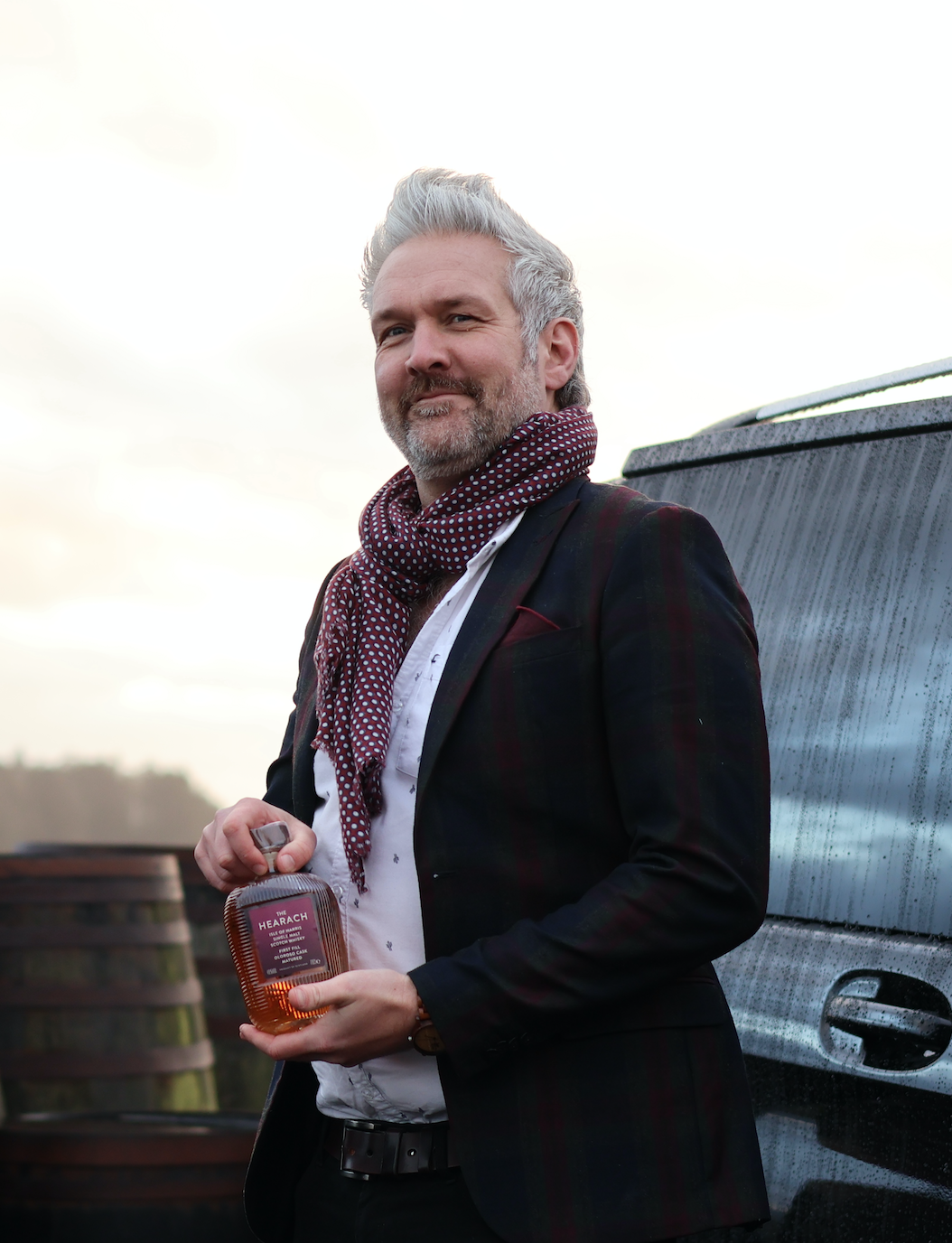
Fraser Campbell is the kind of person who will put in the work to help the drinks industry even when he'd rather go home to his dog or play guitar. He's genuinely forward-thinking - when COVID hit and the UK government scapegoated hospitality with 10pm curfews, Fraser turned around Work From Bars in 24 hours. When Melbourne bartenders couldn't find staff in 2012, he launched the Global Bartender Exchange at 2am on a Sunday. It grew to 150,000 members globally.
But Fraser's also honest about what didn't work. The $20,000 he and Hannah Keirl spent building an app that couldn't compete with Facebook's UX. The unsustainable events when sponsorship dried up. The former friend he had to take to court for unpaid invoices in 2024.
That honesty matters. Because most people only share the wins. Fraser shares the real stuff: the sheer terror of inconsistent income, the people who waste your time or try to rip you off, moving back to Scotland after 13 years away with almost no network.
And then there's this, which is why I wanted to talk to him: "I love an honest weird tasting note or alternative perspective about whisky flavour, or indeed, what colour is this whisky on the tongue? More of that please."
Fraser's approach to whisky education - making space for different experiences, encouraging conversation, celebrating the unexpected - aligns with what I'm building at Vantage Creative. I experience whisky differently (my brain crosses sensory wires in specific ways), but the broader truth applies to everyone: there's no single "correct" way to taste whisky. Fraser's philosophy validates that. Not whisky education that tells you what you should taste. Whisky experiences that trust you to know what you're actually experiencing.
Here's what Fraser taught me about building communities, going independent, and why the whisky industry needs less gatekeeping and more honesty.
The Accidental Community Builder (Who Learned What Actually Sticks)
The Global Bartender Exchange didn't start with a business plan. It started with Fraser managing The Alchemist cocktail bar in Melbourne in 2011, desperate for staff, and watching his Facebook posts get lost in the news feed.
"I think like most ideas for these projects it's usually born out of some sort of frustration or problem that needs solving, and wondering why no one else has done it yet," Fraser explains. He created the Melbourne Bartender Exchange in October 2011 by adding everyone he knew from the local bar scene to a Facebook group. It worked. Then in 2012, it snowballed into the Global Bartender Exchange.
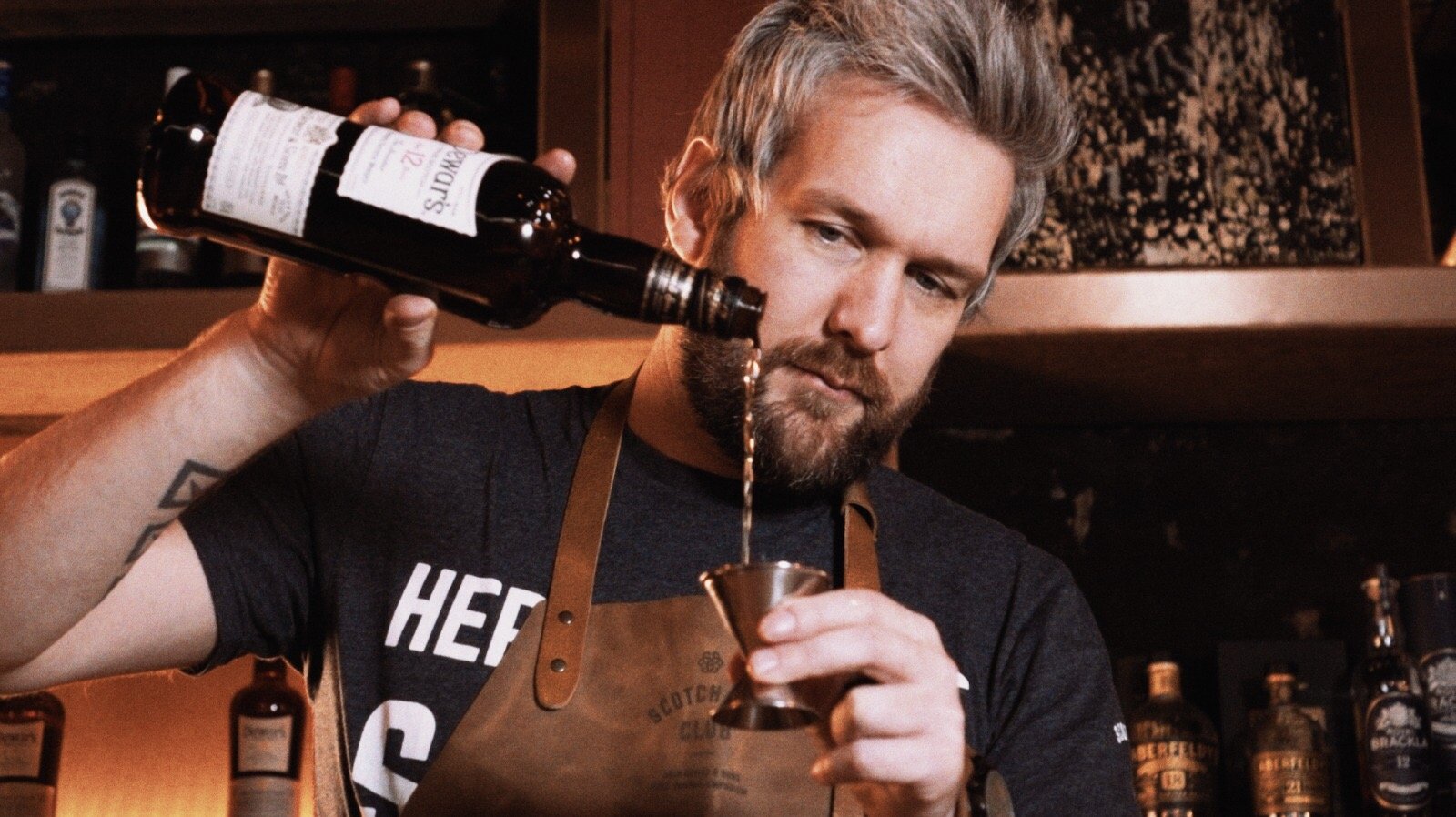
But here's what's interesting: Fraser's learned what sticks by also experiencing what doesn't. He and Hannah spent about $20,000 AUD building a Global Bartender Exchange app over two years, but got "defeated by the UX of Facebook when trying to migrate people across." Whisky Talks had massive running costs like venue hire, funded by sponsorship and ticket sales. When sponsorship became sparse, it became unsustainable.
So what's the difference between what sticks and what dies?
"I think they all have a shelf life, but it has to exist in a place which is accessible and relevant," Fraser says. "For long term success, low overheads and running costs is definitely beneficial."
Work From Bars is the perfect example. During COVID lockdown, when the UK government implemented 10pm curfews on bars ("the Tory muppets in parliament scapegoating hospitality for the spread of covid"), Fraser turned around the entire initiative in 24 hours. He designed a logo, posted the idea on Facebook, and created a map of UK bars where people could work during the day. It solved two problems: work-from-home fatigue and bars not getting enough footfall. The map got over 370,000 hits.
Work From Bars only lasted a few months because it only needed to. It solved a short-term problem.
The lesson here isn't "build a Facebook group and hope for the best." It's that sustainable platforms solve real problems, exist where people already are, and don't require massive overhead to maintain.
This is exactly how I think about Vantage Creative. The whisky industry has a real problem: people feel intimidated by prescriptive tasting notes and gatekeeping language. The solution doesn't need to be complicated - it needs to be accessible, relevant, and sustainable. I'm not trying to reinvent whisky education or create a complicated platform. I'm solving a problem that actually exists.
The Terror and Truth of Going Independent
Fraser left Bacardi and Dewar's after five years travelling the world as a global brand ambassador. He moved back to Scotland after thirteen years living in Melbourne, Barcelona, and London.
What was the scariest part?
"Moving back to Scotland haha."
He's not joking. "After living around the world in cities like Melbourne, Barcelona and London, I wasn't really sure where and how I was going to fit back into Scotland life after being away for thirteen years. It really has been like starting from scratch in a lot of ways, especially being in Aberdeen where I hadn't lived since about 2005, having almost no network around me."
But beyond the geographic adjustment, there's the financial reality that no one talks about when they post about "going independent" on LinkedIn.
"From scratch, it really is just getting used to the sheer terror of not having a consistent income, and having to make genuine sacrifices to get by in the first year," Fraser says. "Also learning how to manage people who either waste your time, give you false promises, are shit at communicating, or try and rip you off for your time. In 2024 I had to take a former friend to court for unpaid invoices and that was most definitely a low point."
Then there's the constant question: "What is your time and experience worth?" in an ever-changing economy.
But Fraser also gained skills from his time at Bacardi that transferred: juggling multiple projects and hitting deadlines, negotiation, organising large-scale events across countries, media and PR training, managing budgets, building relationships with agencies. "You basically just take all that and apply it to yourself."
This is the bit I needed to hear. I came from The Macallan and Edrington. I know how to create guest experiences, manage visitor journeys, build community engagement. But applying all that to yourself, with no brand budget and no consistent income, is completely different.
Fraser's honesty about the court case, the financial terror, the people who waste your time - that's the reality of building something independent. It's not Instagram-worthy. But it's real. And knowing other people have gone through it and survived? That matters when you're in the thick of it yourself.
What Makes Whisky Experiences Actually Memorable (Hint: It's Not Generic)
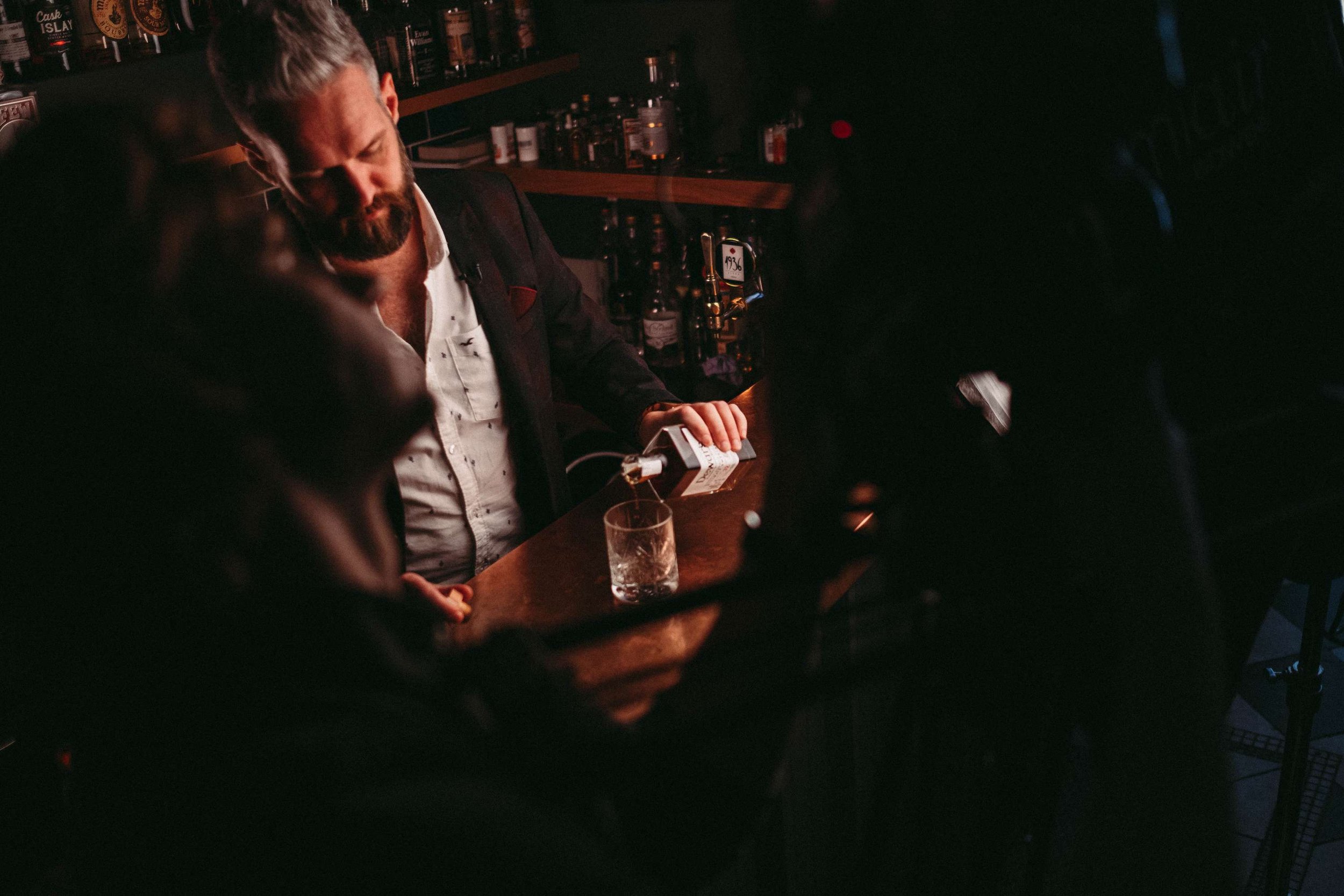
Fraser's worked on events and brand activations across multiple countries for Dewar's. He knows what works and what doesn't.
His test is simple: "If you go to a whisky event, and you think to yourself 'you could insert any whisky brand in here and it would be the same event', then it's instantly forgettable."
The example he gives is brilliant. When he was at Dewar's, they created events called Scotch Egg Club: whisky, cocktails, games, chickens, and scotch eggs. They did these events in about twenty different countries.
Why chickens? Because Tommy Dewar (the brand's founder) used to collect prize-winning chickens.
"It would have made little narrative sense with another whisky brand," Fraser explains. "They were fun events, but to this day I still can't look at another scotch egg."
The point isn't that every whisky event needs livestock. The point is that brand-specific narrative matters. Authenticity matters. If your event could be any brand's event, why would anyone remember it?
This is what the whisky industry needs more of - experiences that couldn't be replicated by just swapping in a different brand. Your approach IS your brand.
For Vantage Creative, that means the philosophy isn't just marketing - it's baked into how every tasting runs. No prescriptive notes, trust your own palate, your experience is valid. That's not something you could drop any whisky educator into and get the same result. It's specific, it's authentic, and it's mine.
Teaching Whisky Without the Classroom Vibes
Fraser's presented to bartenders, consumers, and media across cultures and languages. How does he teach whisky appreciation without falling into prescriptive "you should taste this" language?
"I just make sure people have a laugh and a good time haha. No one wants to feel like they're sitting in a classroom being forced to learn, and you just learn how to speak with different audiences over time."
It sounds simple, but there's depth here. Fraser learned about flavour by visiting different cultures - India, Japan, Mexico. "Each country really does have its own flavour preferences, and so if I'm hosting a mixed crowd then I can identify how they'll probably appreciate the whisky simply based on where they're from."
This is cultural intelligence applied to sensory experience. It's not just "everyone's palate is different" as an abstract concept. It's understanding that someone from Japan might appreciate whisky differently than someone from Mexico, and that's informed by their food culture, their flavour references, their lived experience.
When I'm creating tasting experiences, this matters. The point isn't to get everyone to taste the same thing. The point is to help people build their own sensory vocabulary based on their references, their culture, their life. That's what makes whisky education welcoming instead of gatekeeping.
Fraser's approach - make it fun, make it conversational, respect cultural context - is the opposite of prescriptive. And that's exactly what the industry needs more of.
Making Space for Different Sensory Experiences (Even the Weird Ones)
Here's where Fraser's philosophy really shines.
I asked him: "I experience synaesthesia when tasting whisky - I see colours and full scenes. You've educated thousands of people. How do you make space for wildly different sensory experiences in tastings when everyone's expecting 'the right answer'?"
His response: "I think you've just got to encourage conversation in the room, which is actually the hardest part some times, when it's a room of strangers or the whisky hasn't kicked in yet. When you hear that everyone in the room is experiencing something totally different, it encourages you to say what you're getting even if it is something totally random and nothing to do with traditional tasting notes."
Then this: "I love an honest weird tasting note or alternative perspective about whisky flavour, or indeed, what colour is this whisky on the tongue? More of that please."
More of that please.
This is why Fraser's approach matters. Because the whisky industry has spent decades training people to distrust their own palates. "You should taste leather and tobacco." "You will get notes of dried fruit." And if you don't? The unspoken message is clear: your palate isn't sophisticated enough yet.
But everyone's sensory experience is different. Genetic variations in taste receptors. Cultural context shaping flavour references. Lived experience creating personal associations. My brain happens to cross sensory wires in a specific way, but the broader truth applies to everyone: there is no single "correct" way to experience whisky.
Fraser's approach - encourage conversation, celebrate the unexpected, ask "what colour is this whisky?" - creates permission for people to be honest about what they're experiencing. That permission is powerful. Because once people trust their own palate, they stop looking for the "right answer" and start actually enjoying whisky.
That's what Vantage Creative is built on. Tastings where your experience matters, whether you're tasting your gran's kitchen or a beach in summer or something completely unexpected. Not because I'm telling you that's valid (though I am), but because the environment encourages you to trust yourself. When people hear that everyone in the room is experiencing something different, it gives them permission to be honest about what they're getting.
As Fraser says: "When you hear that everyone in the room is experiencing something totally different, it encourages you to say what you're getting."
That encouragement isn't just good hosting. It changes how people relate to whisky.
What Fraser's Doing Now

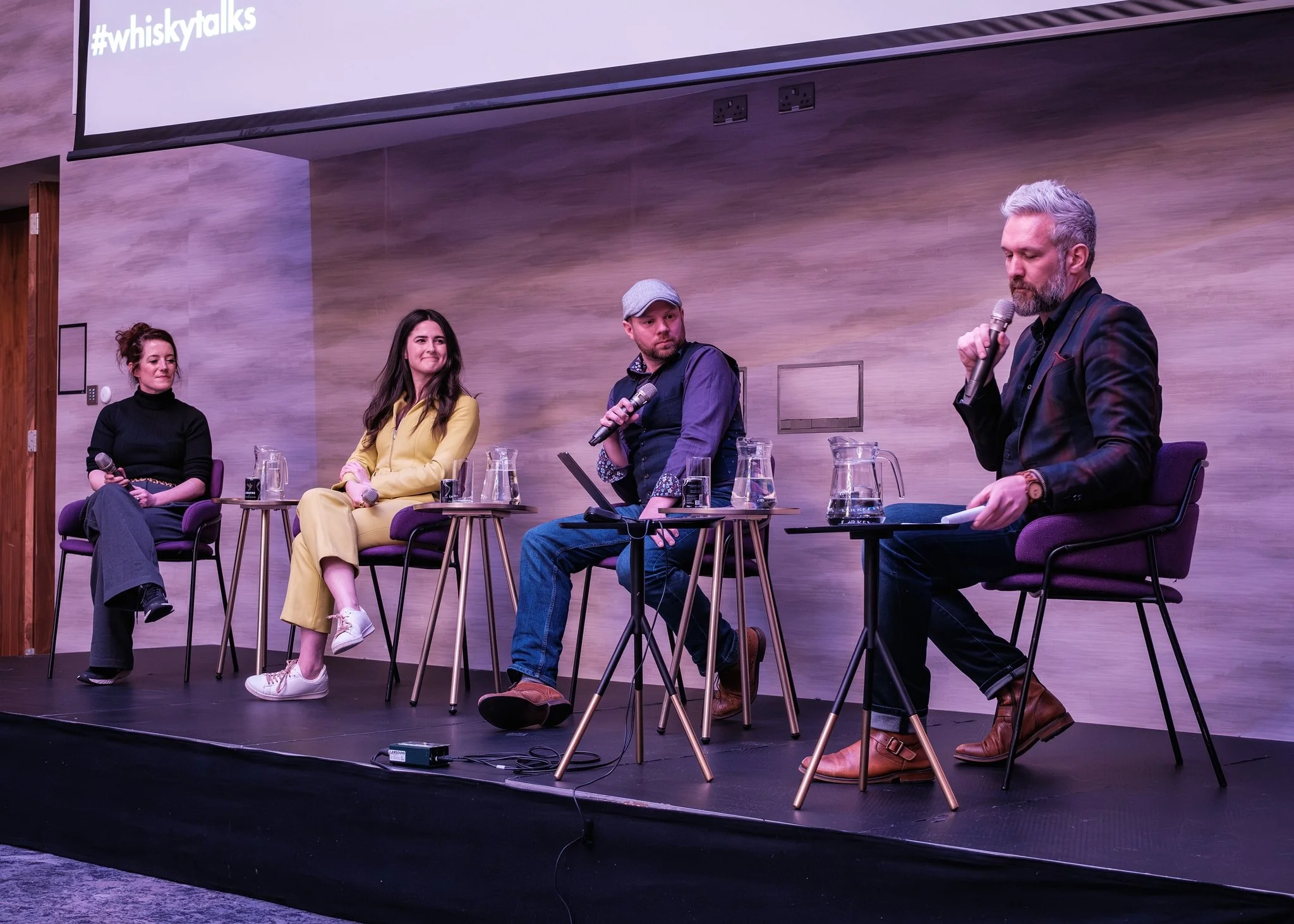
Fraser's based in north east Scotland, working as an independent whisky consultant specialising in brand advocacy, education, and business consultancy. He creates Whisky Bytes - bite-sized whisky education videos on Spotify, YouTube, Instagram, and TikTok aimed at bartenders, tour guides, and retailers who need quick, practical whisky knowledge.
He's also just launched One For The Road, a partnership with Macaulay's Private Chauffeur Hire offering luxury chauffeur-led whisky experiences across Scotland - from single-day bespoke tastings to immersive multi-day journeys combining distillery visits, scenic routes, and private whisky tastings.
Recent clients include Bacardi, William Grant & Sons, and Mercado Speakeasy in Puerto Rico. You can find Fraser at fraser-campbell.co.uk or reach him at fraser@fraser-campbell.co.uk.
What I'm Taking Forward
Fraser's journey from brand ambassador to independent consultant isn't a straight line of success. It's messy. There are projects that didn't work out, unsustainable events, court cases, and financial terror. There's also the Global Bartender Exchange that grew to 150,000 members, Work From Bars that got 370,000 hits in a few months, and a philosophy that actively fights gatekeeping.
The common thread through all of it: solve real problems, build community where people already are, make whisky accessible instead of intimidating, and celebrate honest weird tasting notes.
That last bit matters most to me. Because the whisky industry doesn't need more prescriptive education. It needs more people like Fraser who ask "what colour is this whisky on the tongue?" and genuinely want to hear the answer.
That's what I'm building. Not prescriptive notes. Not telling you what you should taste. Just creating space for your experience to be valid, building your confidence to trust your own palate, and making whisky enjoyable instead of intimidating.
If you're interested in private tastings for your team or friend group where your sensory experience actually matters, get in touch. You can reach me at samantha@vantagecreativescot.co.uk, via Instagram @vantagecreativescot, or through my website at www.vantagecreativescot.co.uk.
Because here's the truth Fraser's teaching us: learning to trust your palate isn't just about whisky. It's about trusting your own experience, your own perspective, your own voice.
More of that please.
